- Our Locations
- |
- 09 272 0002
- |
- Are you an existing client? Update your details

What Happens if I Die Without a Will in New Zealand?

Updated July 2026 | By Claire Endean, Director
If you die without a will in New Zealand, the law decides who gets your property, not you. Your estate is divided according to a fixed formula in the Administration Act 1969, and the High Court must appoint someone to administer your estate before anything can happen. For your family, that means extra cost, extra delay, and an outcome that may be nothing like what you wanted.
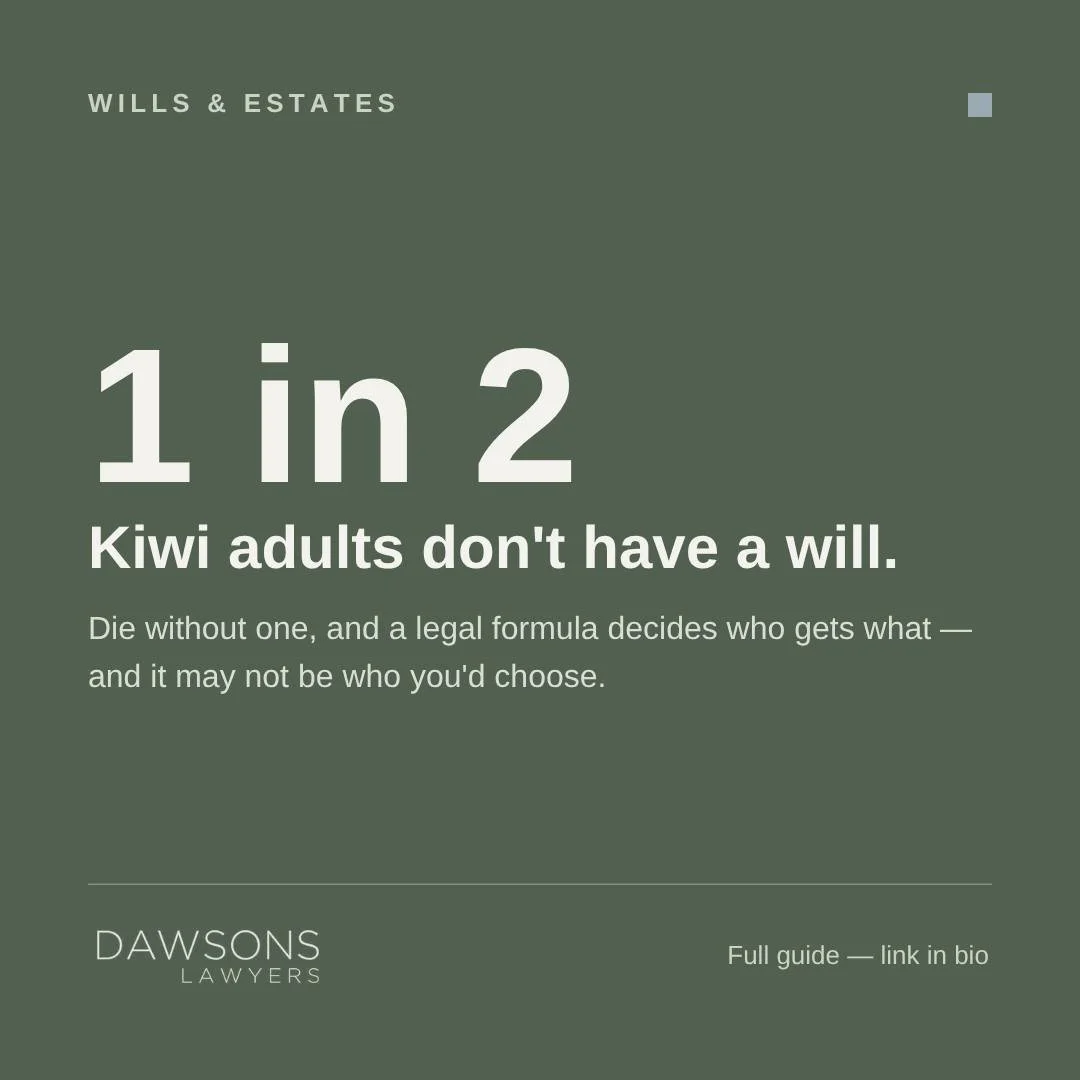
Dying without a will is called dying "intestate". It is more common than you might think: around 1,500 New Zealanders die intestate every year. Here is what actually happens, and how simple it is to avoid.
Step one: the court must appoint an administrator
With a will, your chosen executor can usually apply for probate and get on with things. Without one, a family member must apply to the High Court for letters of administration. Before the court will appoint an administrator, your loved ones must show they have made a genuine effort to find a valid will, and that enquiries have been made about anyone else who might have a claim on the estate, including children from other relationships.
This process typically takes weeks longer than probate, costs more in legal fees, and lands on your family at the worst possible time.
Step two: the law decides who inherits
The administrator must distribute your assets according to the formula in the Administration Act 1969. In broad terms:
• If you leave a spouse or partner and children: your partner receives your personal belongings, a prescribed amount set by regulation (currently $155,000), and one third of what remains. Your children share the other two thirds.
• If you leave a spouse or partner and parents, but no children: your partner receives your personal belongings, the prescribed amount, and two thirds of the rest. Your parents receive the remaining third.
• If you leave no partner, children or parents: the estate passes to wider family in a set order, such as siblings, then grandparents, then aunts and uncles.
The formula does not know your family. It cannot leave anything to a stepchild you raised, a close friend, or a charity you cared about. It can also mean people you would not have chosen do inherit.
What this means for blended families and de facto couples
Intestacy rules are especially hard on modern families. De facto partners generally need to have lived with you for at least three years to qualify. Separated but not divorced spouses can still inherit. Stepchildren who were never legally adopted usually receive nothing. If any of these describe your situation, a will is not a nice-to-have; it is the only way to make your intentions count.
The fix is simple: make a will
A straightforward will is quick to prepare and one of the least expensive legal documents you will ever sign. It lets you choose who administers your estate, who inherits, who would care for your children, and any specific gifts or wishes. While you are at it, consider enduring powers of attorney, which cover decisions if you lose capacity during your lifetime.
Dawsons Lawyers has helped East Auckland families with wills and estates since 1965, from our offices in Kohimarama and East Tamaki. We explain everything in plain English and are upfront about fees. Book an appointment online or call 09 272 0002.
Frequently asked questions
Does my partner automatically get everything if I die without a will?
No. Even a long-term spouse or partner shares the estate with your children or parents under the intestacy formula. Many people are surprised the family home may need to be sold to achieve that division.
What happens to my KiwiSaver and life insurance if I have no will?
KiwiSaver balances generally form part of your estate and follow the intestacy rules. Life insurance depends on how the policy is owned and any nominations. A will removes the guesswork.
Can I write my own will?
You can, but home-made wills are a leading cause of estate disputes. Strict signing and witnessing rules under the Wills Act 2007 apply, and an invalid will can be worse than none. Having a lawyer prepare it costs little compared with the cost of getting it wrong.
How often should I update my will?
Review it after any major life event: marriage or a new relationship (marriage generally revokes an existing will), separation, children, buying property, or a death in the family. Every five years is a good default.
Disclaimer: The information in this article is general information only and must not be relied on as legal advice. Please contact us for advice on your specific situation.